Friday, January 28, 2011

Who Is Scripps?

Ever wonder just who Scripps is, whose name is all over buildings in San Diego? Wonder no more!

Let’s begin with the institute with the top doctoral program in the United States, Scripps Institute of Oceanography! (If you don’t believe me, check out this article released less than five months ago - scrippsnews.ucsd.edu)
Photo courtesy of Phillip Colla
The first director of Scripps Institute of Oceanography was a Professor of the Department of Zoology at the University of California at Berkeley, William E. Ritter. Ritter came to San Diego for a research project on the animal life in the Pacific Ocean and the first building was constructed by the Marine Biological Association of San Diego. Two sibling subscribers of the Association and close friends of Ritter, Ellen Browning Scripps and Edward Wills Scripps, donated generous funds for construction and 170 acres to the Association. In 1912, the facility became Scripps Institution for Biological Sciences and then thirteen years later became Scripps Institution of Oceanography of the University of California. In 1957, Regents approved the establishment to become part of the University of California at San Diego. Today Ritter Hall contains labs, offices, and conference rooms for various oceanic researchers.
The original Scripps Pier was finished in 1916 and was used for obtaining clean sea water for the aquarium and for the research labs. Ellen Scripps provided the funds for this project. The pier was completely replaced in 1988; an additional 84 feet was added, making it 1,084 feet long. It became known as the Ellen Browning Scripps Memorial Pier and her grand-niece, Ellen Clark Revelle, gave Ellen Scripps’ biography at the dedication ceremony. (By the way, Ellen Clark Revelle was global warming scientist Roger Randall Dougan Revelle’s wife.) The Scripps Memorial Pier is solely used for research. Data on oceanic conditions and plankton have been taken since 1916 and French naval officer, explorer, ecologist, filmmaker, innovator, scientist, photographer, author, and researcher, Jacques Cousteau’s vessel, among many others, has been lowered from this pier.
Image courtesy of SIO
Something I always wondered was 'how did this Scripps person become so wealthy'? Let’s back up and tell that story. After graduating college in Illinois, Ellen Scripps taught before working with her brother (James) on the newspaper he founded- the Detroit Evening News. She invested her savings in this newspaper and eventually it became one of the most popular in the country. She then helped her half brother, E. W. Scripps, found other newspapers with her personal savings. As these enterprises grew, so did her wealth.
The Children's Pool at La Jolla Cove
Ellen spent the last thirty-five years of her life in La Jolla. Because she often donated anonymously, the exact endowment is unknown, but it was well into the millions. The donated money didn’t all come from her wise business practices; she obtained a large sum from her brother George’s will. She cared greatly in benefitting humanity and therefore funded wherever she saw fit.
Plans for the Scripps Memorial Hospital began while Ellen was recovering from a broken hip. She dedicated this facility to her sister, Annie. Meanwhile, one of Ellen’s doctors proposed a research facility to study diabetes in response to the discovery of insulin. Consequently, the Scripps Research Institute was completed in 1924. The founder-director, Dr. James Winn, was the first doctor to use insulin in the United States.
Other contributions from Ellen Scripps include The Bishop’s School, the North Grove and estuary of Torrey Pines State Reserve, La Jolla Precinct, La Jolla Recreation Center, the original aquarium at Scripps, the football field and stadium at La Jolla High School, Scripps Park, Scripps Aviary at the San Diego Zoo, Scripps College in Claremont, California, Scripps Cottage at San Diego State University, and the Children’s Pool at La Jolla Cove. Ellen’s home was bought and remodeled in 1939 and is now the Museum of Contemporary Art San Diego.
The Museum of Contemporary Art
The MCA in La Jolla is temporarily closed but is scheduled to reopen on Feb. 5, 2011. In case you didn’t know, admission for all students under 26 years are FREE! The address is 700 Prospect Street. Also, don’t forget to check out Birch Aquarium and all the tours they offer!

Thursday, January 20, 2011

New Zealand Christmas Tree at UCSD


Did you know we have a tree on campus that is famous for living to be 1000 years old? This tree is also an important holiday icon in New Zealand, much like mistletoe is in America.The New Zealand Christmas tree, also known as the mainland pohutukawa (pronounced like Po-Who-Too-COW-A) and Metrosideros excels, can be seen in the Chancellor’s Building’s courtyard. Upon first glance you will notice the bundles of ‘branches’ dangling down, completely perpendicular to the soil. These are called aerial or adventitious roots – yes roots! In its native habitat, the rocky northern coast of New Zealand, the New Zealand Christmas tree can thrive in barren, rocky coastal cliff-like environments where soil moisture can be rare.

Remember the trees are windblown on cliffs and coasts. This sucks moisture out much faster than a calm environment; moisture loss increases with wind speed. Take a look at the leaves. Notice how the tops of the matured leaves are dark and slick, which prevents moisture loss. The bottoms are light and fuzzy, also known as pupscent. This texture is produced by microscopic hairs that the tree has adapted as another way to keep moisture in. Even a minor slowing of wind velocity can have a significant effect on reducing moisture loss.

Now it is time for a brief lesson on New Zealand. The name New Zealand Christmas tree came to be not because New Zealanders (also known as 'kiwis') bring them into their homes and decorate them with ornaments for your cat to knock down, but because of its flowers. Christmas in New Zealand is widely celebrated outside because December is a summer month south of the equator. This tree provides gorgeous decorations of red blossoms that bloom profusely before Christmas and into January. The flowers color shorelines and hillsides; they are brought inside homes as ­­­­ornamentation and are commonly printed on holiday banners and cards, making these flowers an important part of New Zealand Holiday tradition.
Photo taken from savingourtrees.wordpress.com
This tree and its flowers have held a prominent role in Maori (the native people of New Zealand) culture. According to legend, Tawhaki, a young Maori warrior, attempted to climb to heaven to find his father. Unsuccessful, Tawhaki fell to earth. The red flowers are said to represent his blood. Furthermore, The New Zealand Christmas trees’ branches are believed to be the leaping place for departed souls entering the underworld.


The New Zealand Christmas tree is more than just visually pleasing. Maori and possibly early settlers used the leaves and bark of the New Zealand Christmas Tree for a variety of medicinal purposes. Its flowers and roots contain several antioxidants including anthocyanins - which are usually found in red colored fruits like blueberries - flavonoids, and chalcones. These have been studied and have shown positive results in diverse health effects, from anti-inflammatory properties to inhibition of tumors.

Now you know that this tree not only provides shade for Chancellor Fox's visitors, it is very important to Maori and New Zealanders, and is helping in cancer research (along with many other plants - but that is a different topic!).

By the way, if you thought a tree live 1000 years is a long time, you'll be surprised to know that the oldest living tree in the world has a root system dating back 9,950 years! Read the article here:
http://news.nationalgeographic.com/news/2008/04/080414-oldest-tree.html.


Thursday, December 2, 2010

Figs, figs, the inverted fruit...

Welcome again to another week of Natural Treasures! Hello to all of our new subscribers. :)

Word association game time: When you think of figs, what's the first thing that comes to mind?

Make your own at home! A great recipe found here.
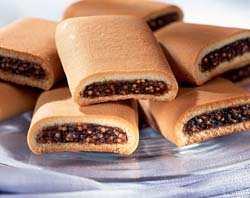
Ah, well, that's close enough. If you're really food-minded, you might even think of these:

Most figs harvested in the United States are
grown in the San Joaquin Valley of California.
Read more about this industry at californiafigs.com.

Yum! But you may be surprised to find that around campus, we have a species or two of fig (or Ficus) of our own. They look like this:


Dr. Henter does a lovely job of modeling our open specimens.
Neat, right? One particularly easy-to-find fig tree grows on the walkway next to the Sun God statue, leading to AP&M and Muir Biology, just on the outskirts of the Faculty Club parking lot. Here, you'll find zillions of fallen fruits. Truth be told, neither Nicole nor I have looked into whether or not these figs are appetizing or even edible... an adventure for another time. Our best guess for this particular species is that it is a Ficus rubiginosa.


Ficus rubiginosa. Maybe.

So what's the big deal with figs? Why do they look the way they do on the inside? The "fruit" itself is actually what is called an involuted inflorescence-- a collection of many tiny flowers growing on the inside of the enclosure rather than on the outside. Thus, the only way to see the flowers of the fig tree is to cut open the "fruiting bodies", where each individual flower holds one individual seed.

Let's think about this now. From what most of us have learned since grade-school science is that most plants need to be pollinated in order to reproduce. Pollination occurs from flower to flower. How then do figs become pollinated if their flowers are so hard to access? 

Warning: You'll never be able to think of fig fruits the same way. Weird science ahead! Hold on to your stomachs...

For every species of fig, there is a specialized species of fig wasp that pollinates and lays its eggs in its inflorescences. Within nearly every fig fruit there lays one dead female fig wasp that entered, laid eggs, and died. If you love figs, yes, this means, you've been eating bugs. Hakuna Matata! (If you're a vegetarian or vegan... my apologies for ruining this fruit. But alas! The truth must be told.)

Cute, right?

Fig wasps have an extraordinary life cycle that intimately involves figs. It starts when a female enters an unripened fig through an opening called an ostiole and oviposits, or lays her eggs, in the inverted flowers of the fruit. This process kills the flowers that she oviposits into, but she can only oviposit in short female flowers, thus, the long female flowers are spared and seeds continue to develop. Shortly afterward, the female dies. When the eggs begin to hatch, male wasps hatch first and fertilize their still-unhatched sisters. Wingless and otherwise useless, the males dig escape tunnels for their sisters and die. The sisters hatch, collect pollen from the male flowers and exit the fig they were born in to search for the fig that they will too, lay eggs and eventually die in. 

Nature has a funny way of maintaining balance-- too many oviposited eggs could kill all the seeds of a fig, yet there are usually enough surviving long flowers to produce new seeds. Even weirder-- female wasps are able to control the ratio of male-to-female offspring. After all, you only need enough males to fertilize so many females, and sperm production across the board is relatively low in energetic costs.  This we will revisit in a later post. For now, rest assured that there are some commercial (albeit sterile) figs that do not require wasp pollination... but most figs you'll find on the market are indeed, wasp-pollinated.

Next time you bite into a fig or even a Fig Newton, say a little thank you to the tiny pollinator that made your snack possible. ;-)

Sunday, November 21, 2010

San Diego Climate and Chaparral Fires

If you haven’t noticed, San Diego doesn’t get much rainfall. In fact, average rainfall in San Diego only averages 10.8 inches over the past 48 years (which is about half the amount of precipitation San Francisco gets)! This means that plants in San Diego County are somewhat drought-resistant. Fog, however, adds a great amount of moisture to the air which increases humidity and lowers plants’ evaporation rate. If you are new to UCSD, you will discover that fog has been known to reside over our campus for days or weeks at a time, especially in June and July.

Whether you have traveled around San Diego under its sunny or overcast skies, you may have noticed dense shrubs covering hillsides. This plant community is known as chaparral. Chaparral is the most prominent plant population that spreads throughout Southern California. These plants form dense thickets of woody shrubs on drier and/or shallow soils where woodlands cannot survive. Chaparral originally came from the Spanish word chaparro, which was first used to describe evergreen oak trees in Spain. Mixed chaparral areas can be found throughout La Jolla and the rest of San Diego, but you can view them locally at UCSD’s ecological reserve park and Torrey Pines State Park. The photograph below shows a mixed chaparral community north of Geisel Library.

A view of the chaparral
Photo taken from Google Earth

The dry soils and dense, woody shrubs of chaparral communities are unfortunately famous for catching fire. The fall season’s Santa Ana winds dry out vegetation, which spreads the nearly annual San Diego intense chaparral fires. These fires frequently reach temperatures of 1,200◦F, making them some of the hottest fires in natural environments in the world. Fire intensity is determined by many factors including temperature, humidity, wind, and foliage and stem moisture content. The fires of October 2007 burned 400,000 acres across San Diego County. The Witch Creek Fire, the Poomacha Fire, and the Rice Creek Fire ended up destroying 1259 structures and cost 7.6 million dollars to exterminate. Ashes fell from the sky for days and UCSD was subsequently closed for a week due to poor air quality.


Luckily chaparral shrubs have recovery strategies that have evolved in shrubs throughout the world. Most have woody root crowns below the soil surface that are protected from the heat of the fire. These root crowns are able to quickly sprout multiple new stems because they store carbohydrates, thus rain is not required for post-fire recovery.

Wednesday, November 17, 2010

UCSD Celebrates 50+ Years of Eucalyptus Trees

It's something that we learn to notice, speculate on, and eventually learn to ignore-- the hordes and hordes of eucalyptus trees found on the UCSD campus. They're everywhere and in every college. We pass by them every day, make wisecracks about their uniform dispersal, and bemuse ourselves with the Talking, Singing, and Silent individuals. These more artificially-preserved trees aside, the groves of trees on our campus have become living walls of greys and greens that we have come to chalk up as all one genus of plant. Of the thousands of trees currently growing on the UCSD campus, more than 220,000 are of the genus eucalyptus. However, how many distinct species of eucalyptus can be identified in their midst?

Photo courtesy of Dr. Heather Henter

No less than 18 different species of eucalyptus sprout around us. If you look closely, you might be able to spot the more obvious differences-- some have smooth bark while some are rough; some are white-grey while some are ashen and almost black. Which ever way you spin it, the eucalyptus are more diverse than we give them credit-- in Australia, where the trees are native, there are over 700 different species that have evolved over centuries of geographical isolation. But why in the world would our campus in sunny San Diego be covered by some smelly, invasive tree from across the ocean?

Back when UCSD was even conceived as an idea, the grounds where our campus currently stands was a eucalyptus tree farm. In the 19th century, eucalyptus was prized for its quick growth time and ability to thrive in San Diego's weather conditions. It was used both medicinally and for construction during a time of "timber famine" (however, the construction plans were later realized to be lacking in long-term strength). Consequently, this eucalyptus farm was also a place for alcoholics and county prison inmates to "sober up" and contribute back to society during their incarceration. After the interest and enthusiasm for eucalyptus died down, the trees remained in the area until the construction of UCSD in the mid 1900s. 95% of the original trees from the farm have been deforested or chopped at least once, save for a few exceptions-- the trees next to the Main Gym and Urey Hall have survived the last century without ever once being pruned or cropped.

Next time you see a eucalyptus tree on campus (which I can assure you will be quite soon), take a look around and see if the trees around it are similar or not. You'd be surprised as to how different things are once you start to pay attention. :)

Monday, November 15, 2010

Layers of a Tree Trunk and Tree Wounds


Many people believe there are two layers in a tree’s trunk: the outer bark they can see and the inner ‘wood’ that supports a tree. In fact, there are five layers in a tree trunk and the two layers most people know about are both actually dead.
The outer bark that some people like to carve into and write cliché messages like “Me+Y.L.=Love” is a tree’s protection layer from bugs and insulation from weather. Just inside the outer bark is the inner bark, also known as the phloem. This layer transports nutrients throughout the tree. The phloem soon dies and the older phloem becomes part of the outer bark. The cambium layer is the growing part of a tree’s trunk. You have probably heard that the age of a tree can be determined by a cross section of a tree trunk. This is correct, and the annual rings are formed by this layer. As long as a tree is receiving nutrients, hormones are formed, thus new bark and wood are produced. Sapwood is the new wood that the cambium layer forms. This layer transports water to the tree's leaves. Older layers of sapwood die and turn into the next layer, heartwood. Heartwood is the center of a tree trunk and will not decay or lose its extreme strength as long as the other layers of a tree are intact and functioning.

This is a tree located in the middle of the Student Services Center (down the stairs from Croutons) and shows a tree’s response to pruning. At one time a branch here was pruned. Notice that the clean cut is inside the outer bark. How did this happen? There are actually four layers that formed after the pruning occurred. The first three layers are known as compartmentalization. The first is something like a band aid, plugging cells directly around the wound (yes-pruning trees create an injury!). It protects the tree from further injury from infection and decay. The second layer consists of cells that form each year and act as guards against any infection entering past the first defense layer. The third layer resists lateral spread, using physical and chemical defenses. The final layer is known as a barrier zone. New wood that contains natural fungicides is formed. This wood is harder and stronger due to 1) an altered arrangement of cells, 2) an increase in axial parenchyma, which provides more energy to the injured tissues, and 3) the cells acquire toxins to kill off any invading organisms. This fourth layer is what you see directly in front of the pruned section of this tree.

Thursday, November 11, 2010

Poke!


Mimulus aurantiacus, also known as the monkey flower, is one of the most interesting flowers on UCSD’s campus because of the steps in its pollination sequence. Unlike most plants that we come across daily, these plants are capable of very rapid movement! The monkey flower is a shrub native to California and can be found on campus north of Geisel Library in UCSD’s ecological reserve park. Although monkey flower colors vary, the campus' flowers are generally an orange-red. The stigma lobes, which look more or less like tiny white fish lips, are part of the female reproductive system in plants. What makes this flower unique is the closure of the lobes upon touch, an action that you can watch from beginning to completion in just a few seconds. If the lobes are touched without pollen, the lobes close but then will quickly reopen within the next day. If the lobes are touched with pollen, part of the male reproductive system in plants, the pollen will continue down the pistil to the ovule. If many pollen grains make it into the ovule, the lobes will never reopen. However, if only a few grains travel into the ovule, the lobes will most likely reopen. These plants are commonly pollinated by bees and hummingbirds, so be on the lookout for both if you if you come across these flowers, which bloom from March to July. Try touching the white stigma lobes and watching them close! We guarantee that afterward, you'll never be able to pass by a bush of monkey flowers without having an urge to prod them. Happy poking!